- Talkrev AI
- Posts
- The Super Bowl Effect: How Businesses Can Benefit From the Biggest Event of the Year
The Super Bowl Effect: How Businesses Can Benefit From the Biggest Event of the Year
The Super Bowl isn't just for big brands. Discover how event planners, customer service teams, and local businesses can use it as a strategic demand accelerator for visibility, engagement, and operational growth.

TalkRev AI & Anastasiia Dziuban
February 05, 2026
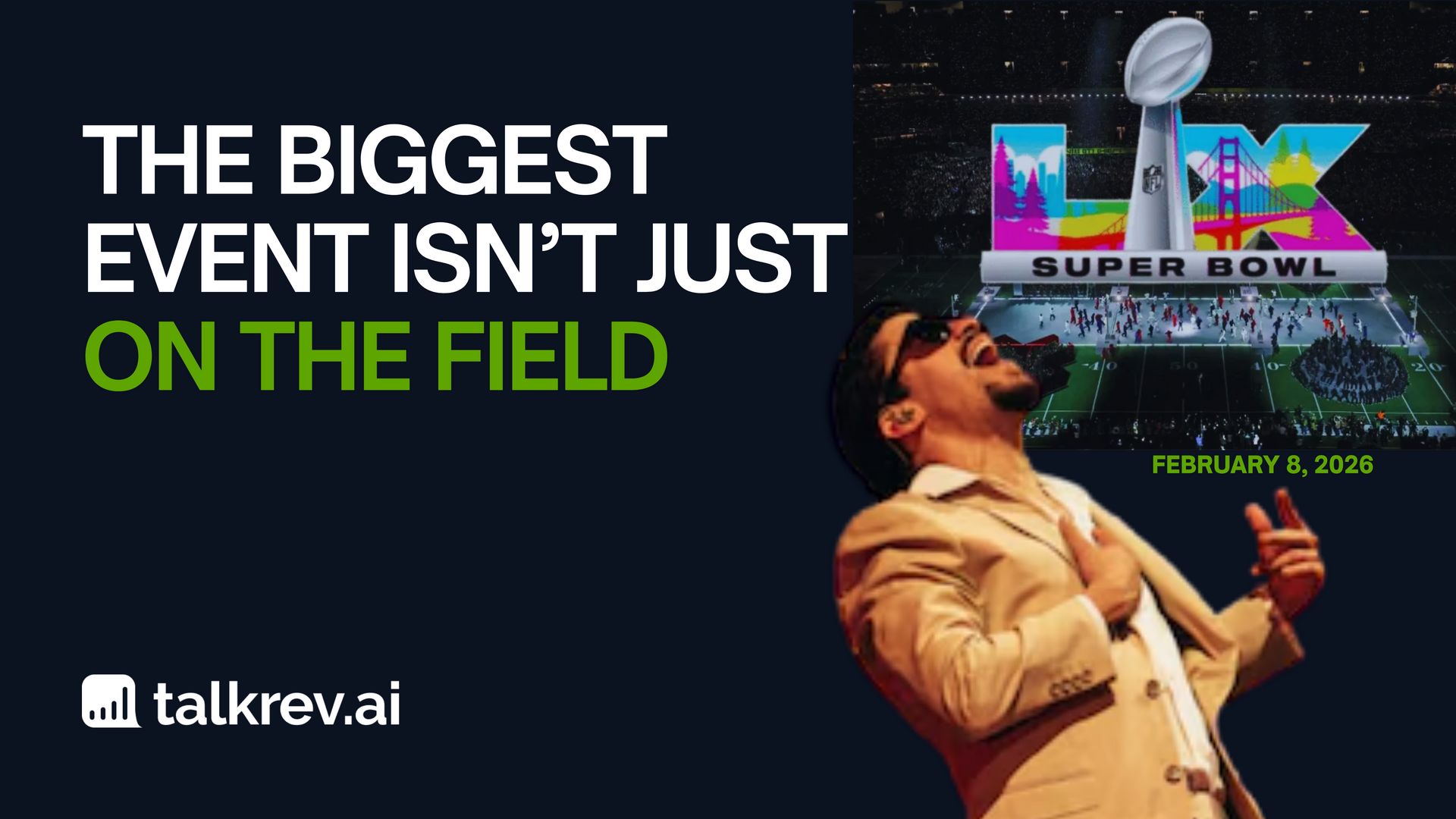
The Biggest Event Isn’t Just on the Field — Super Bowl 2026, February 8, Featuring Bad Bunny Halftime Show
The Super Bowl is often framed as a marketing spectacle reserved for global brands with multi-million-dollar budgets. But in reality, it’s something much bigger and far more relevant to everyday businesses.
The Super Bowl is a demand accelerator.
For one weekend, attention, consumption, and customer expectations spike across industries. This creates a powerful ripple effect for food delivery services, hospitality brands, event planners, retailers, and B2B tech platforms. Even businesses with no direct link to sports can leverage this surge in captive audience behavior.
For companies that understand how to use this moment strategically, the Super Bowl becomes less about advertising and more about visibility, engagement, and operational leverage.
Stealing the "Big Budget" Playbook
You don’t need a multi-million dollar budget to use the same psychological triggers as the Fortune 500. Here is how businesses in the tech and event niche can capitalize on the hype:
Emotion Over Information: Big brands know people buy based on feeling and justify with logic later. Campaigns with emotional content perform roughly twice as well as those focusing on raw specs. Instead of listing features, focus on the "human outcome" your service provides. For many people The Super Bowl is a shared experience. Businesses that use it as a relationship touchpoint, often see higher engagement.
Examples:
a short “Enjoy the Big Game” message to customers
internal team engagement (predictions, polls, casual updates)
client check-ins that feel timely, not transactional
Create Themed Promotions (legally): Create urgency with time-sensitive offers: game-day specials, like a discount tied to the final score or a free item with every order during halftime. To avoid a "penalty" for infringement, businesses must be strategic with their language. Unless you have an official license, stay "in bounds" by avoiding the terms "Super Bowl" or "Super Sunday" in your promotional materials. Frame it around “The Big Game”, “Football Championship Sunday”, "The February Finale", "Championship Sunday" or"Game Day Deals".
Leverage Local Partnerships: Team up with complementary local businesses—a pizza place with a beverage store, for example—to create joint “watch party” bundles. Cross-promotion expands your reach.
Social Media "Interceptions": During the game, consumers don’t put their phones down; they use them to scroll social media. Small brands can win by engaging in real-time commentary, spoofing famous ads, or launching "interception" campaigns that redirect the conversation to their own channels.
Generate Themed Content: A fitness studio can share “halftime workout” videos. A bakery can feature football-themed treats. A tech retailer can blog about “the best TV for watching The Big Game.” Connect your niche to the event’s themes of competition, celebration, and gathering.
Encourage User-Generated Content (UGC): Run a simple photo contest asking customers to share their setup featuring your product. Offer a prize for the best submission. UGC builds community and provides authentic promotional material.
The AI Frontier: For the tech-forward, 2026 is the year of interactive AI. Giants like OpenAI and Google use this stage to show how AI builds connections. Startups can mirror this by using AI-driven customer service tools to handle the spike in inquiries with high-speed, personalized responses.
The Operational Stress Test: Managing the Surge
Another critical lesson for any service-based business—from local eateries to logistics startups—is the sheer magnitude of the demand spike that occurs within a tiny window of time. Last year, Americans consumed over 1.4 billion chicken wings and ordered upwards of 12.5 million pizzas, with nearly 47% of people planning to order out for their parties this year. For many businesses, especially in food service, delivery, and retail, this surge isn't just a sales opportunity; it’s an operational stress test where staffing levels, inventory management, and delivery speed define the future of your brand loyalty. Scoring big on sales means nothing if a service fumbles the customer experience during the rush.
Restaurants & Delivery Services: Expect order volume to skyrocket, particularly during pre-game and halftime. Ensure your staffing, inventory, and delivery logistics are scaled accordingly. Promote order-ahead options to manage flow.
E-commerce & Retail: If you’re running a Game Day sale, ensure your website can handle increased traffic and that fulfillment is prepared for a spike in orders.
Customer Service: Have a plan to manage increased customer inquiries across social media, email, and phone lines. A quick, helpful response during a surge can turn a stressed customer into a loyal one.
Marketing can drive demand, but operations must deliver on the promise. Preparing for the volume spike is as important as planning the promotion. By developing a strategic, integrated, and operationally sound plan, businesses can capture a piece of that attention, drive meaningful engagement, and score significant commercial gains. Whether through a multi-million dollar narrative or a clever, local social media play, the goal is the same: connect with your audience when they are most tuned in.
Get your game plan ready—it’s almost time to compete.